

When a dangerous structure suddenly becomes your responsibility, knowing what to do and who to call matters. Perhaps a car crashes into a building and knocks a wall down. Or a rampant fire tears through floors and steelwork. Maybe a long-derelict property becomes unsafe to enter overnight. In these situations, clients, architects, and project managers are often faced with urgent decisions about structural inspections, temporary works, and how to make a building safe before repair, refurbishment, or demolition can even be considered.
At MESH Engineering, we’re often brought in at the point where everyone’s thinking, “what now?”. So we’ve written this article as a practical guide for you in case you suddenly find yourself responsible for a dangerous structure and need to make it safe, quickly and sensibly.
Read on to find out what happens during the early stages of dealing with a dangerous structure, what a structural engineer actually does in these situations, and how clear goals and pragmatic collaboration can prevent delays, unnecessary costs, and further risk.
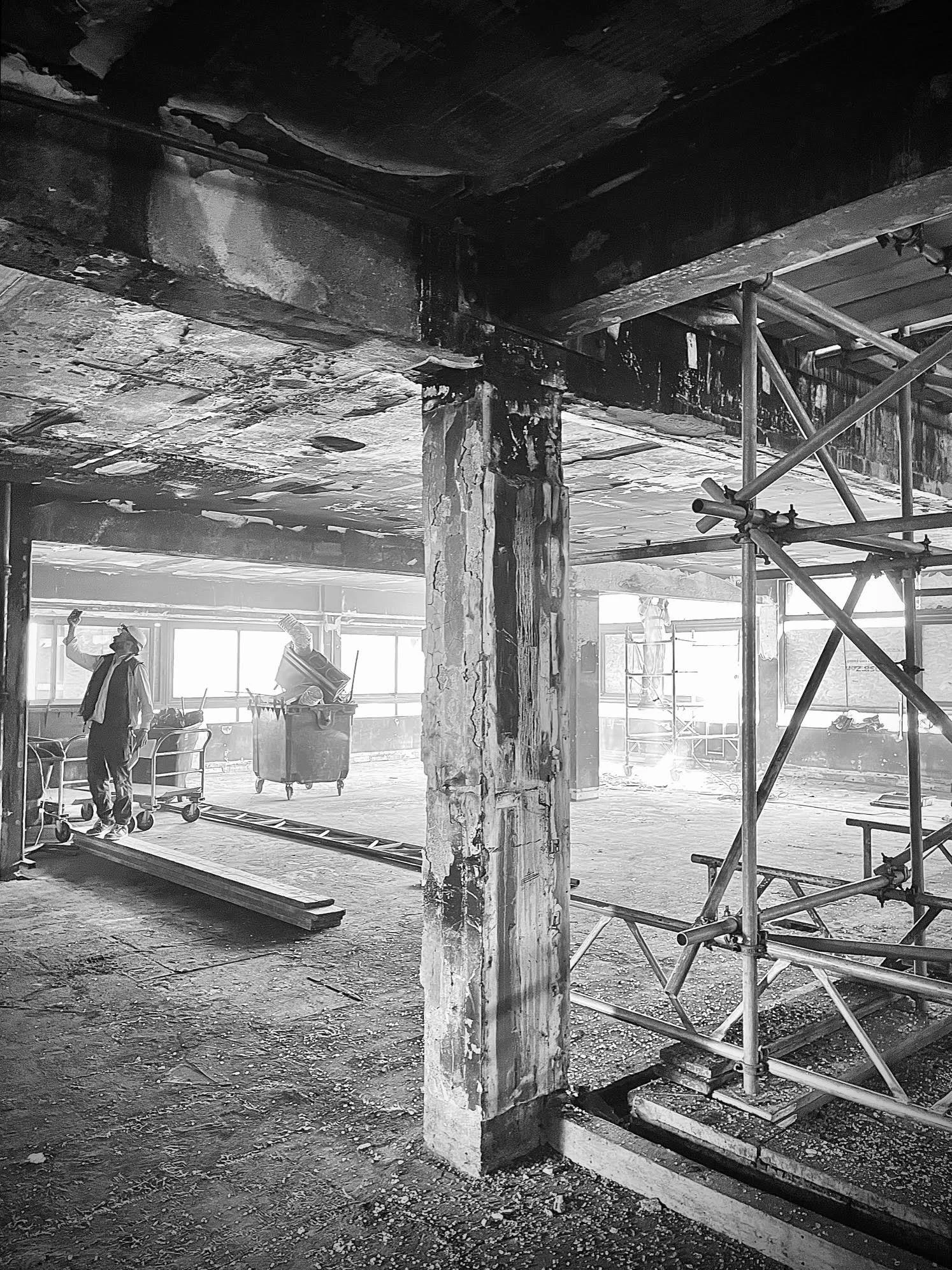
Start with investigating on site
The first job, when a structure becomes dangerous, is not to jump to conclusions or straight to solutions, but to understand what is actually happening.
Take a vehicle impact, for example. A car hits a building and knocks out part of a wall or a floor. The damage is obvious and perhaps alarming, and people may still be living inside the building. But the most important question isn’t what’s visible, it’s how that impact has affected the load-bearing structure as a whole.
At this early stage, our role (as structural engineers) is to assess whether the building is still stable, which elements are doing the work they’re meant to be doing, and which ones are no longer reliable. From there, we advise on what needs to be temporarily supported to prevent further collapse.
This often involves temporary works, such as propping or scaffolding, to stabilise the structure so that repairs, investigations, or demolition can happen safely. The priority isn’t the final outcome at this point; it’s making the structure safe enough to allow the next step to happen without putting people at risk. And only then can we give advice about what can be done next.
Fires can cause structures to behave in unexpected ways
Fire damage creates some of the most challenging and unpredictable structural conditions. Fire can bend the structures of steelwork, making it twist and deform in ways that are hard to imagine. Timber elements can be completely burned away, leaving large gaps where structure once existed. Floors may be partially or entirely gone making the building completely unsafe.
On top of all this, the fire brigade will often have doused the whole building with large volumes of water, which can introduce further problems. Rapid cooling and saturation can cause concrete, masonry, and glass to fail in ways that aren’t immediately obvious.
In many post-fire buildings, simply entering the structure is unsafe.
When we attend a fire-damaged site, we typically do so alongside a contractor. We identify the key structural elements that remain, assess how fire and water have affected them, and advise on how those elements can be temporarily braced or supported.
Not every damaged element threatens the overall stability of the building, but loose or partially failed elements can still be extremely dangerous. In some cases, the safest option is not to leave damaged materials in place, but to carefully remove them in a controlled way. That might mean stripping out one or more floors and installing temporary bracing to ensure the rest of the structure remains stable.
The aim is always the same: to stabilise the building so people can work safely, without triggering further collapse.
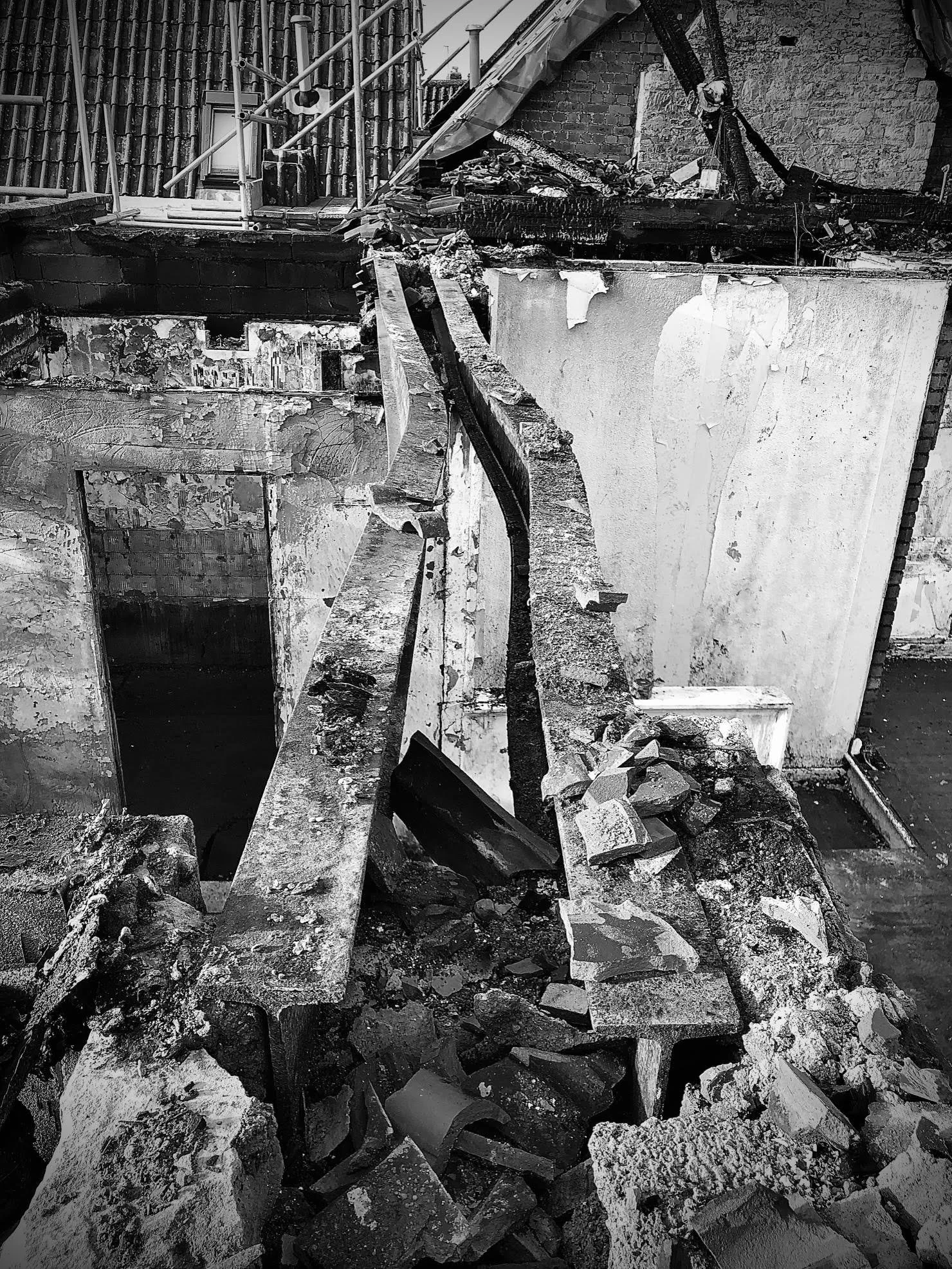
Asbestos - how to get things done without cutting corners
Asbestos often complicates already difficult and dangerous situations.
Unfortunately, we regularly see projects stall because asbestos specialists are understandably cautious about entering unsafe buildings. Without safe access, they can’t assess what materials are present, but without that information, no one else can move forward either.
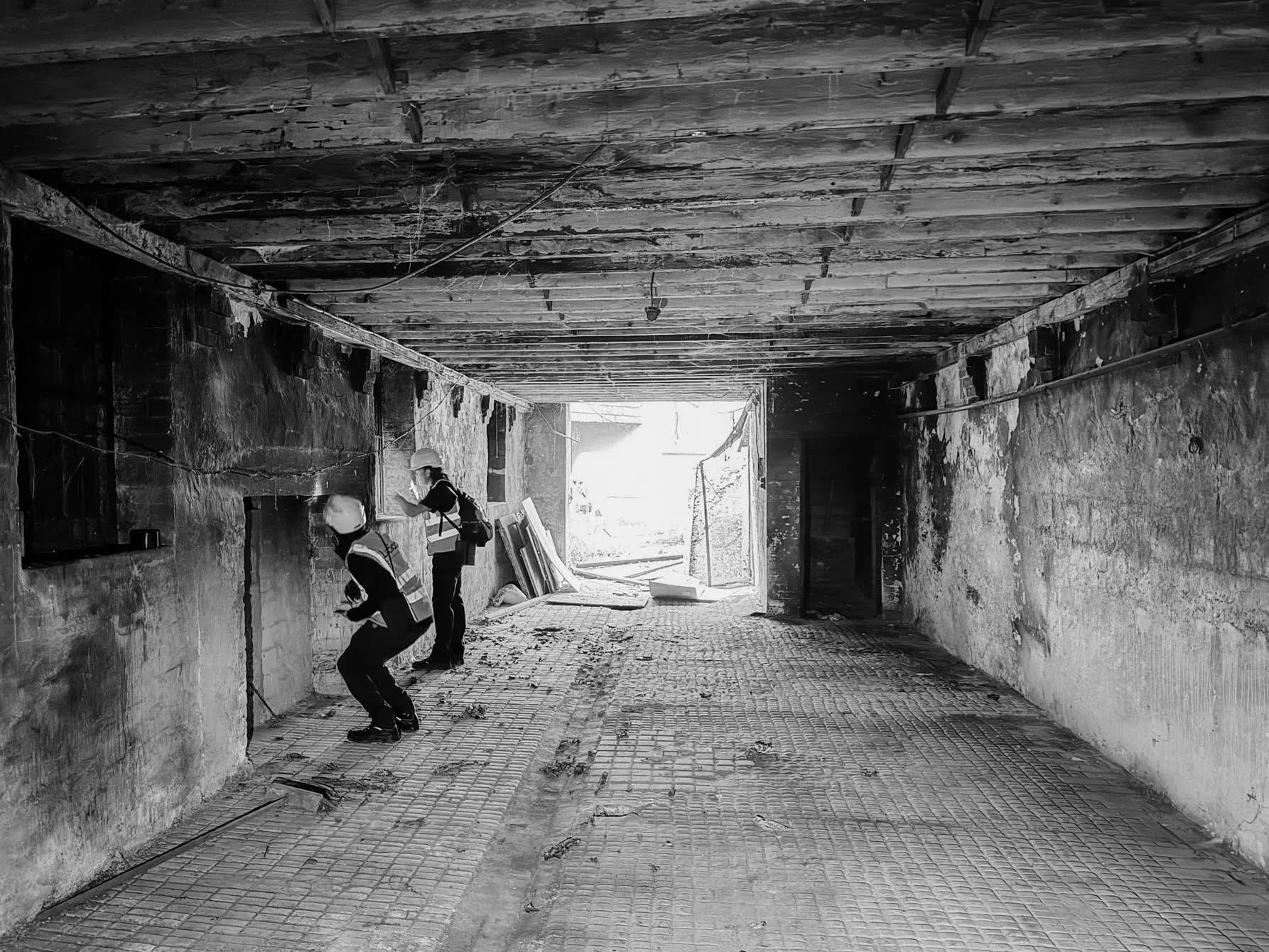
Our approach is pragmatic and collaborative. On one recent project, fire had destroyed the floorboards, but the joists beneath were still intact. By installing temporary scaffolding boards, we were able to create safe access so asbestos specialists could enter, take samples, and send them for laboratory testing.
Once the presence and extent of asbestos were understood, contractors could be brought in to remove affected areas and install temporary plywood decking. That, in turn, allowed further investigations and works to continue safely.
At MESH, we’re always thinking a few steps ahead. Rather than treating investigations, strip-out, and temporary works as stand-alone or separate stages, we often assess and adapt as we go. We find that this approach keeps projects moving without compromising safety.
Scaffolding should support the building, not endanger it
Scaffolding is often essential when dealing with unstable or damaged structures. But if it’s up for long periods of time, or is poorly coordinated, it can become a risk in its own right.
Scaffolding can also be damaged by vehicles (see this recent bit of news), destabilised by high winds, or tied into parts of a building that aren’t structurally sound. In those cases, it can place additional stress on an already vulnerable structure.
This is why collaboration is critical. We work closely with scaffolders to make sure that the scaffold itself is safe, and that the elements it relies on are capable of carrying the loads imposed on them. Temporary works need to be reviewed as conditions change, not installed and forgotten about because they are just that — temporary.
What are you trying to achieve?
One of the biggest challenges with dangerous structures isn’t technical necessarily, it’s usually uncertainty. Because before an inspection even begins, we need to understand what the client wants to achieve next. Is the building being repaired? Refurbished? Or demolished?
These decisions fundamentally shape how an inspection should be carried out.
If a building is being restored, we’ll assess which elements can safely be retained and reused. But if floors are going to be removed anyway, there’s little value in spending time assessing their long-term condition. What matters instead is understanding how removing those floors will affect the stability of the remaining structure, particularly the walls.
We don’t need to know the final masterplan, and we understand why clients are sometimes cautious about sharing intentions. What we do need is clarity on the next step. Without that brief, an engineer can only produce a report listing risks rather than advice, and the project is then left quite stuck, the other contractors asking what happens next. It can often mean higher costs, with repeated site visits and client calls to get further clarity.
Why clients value MESH Engineering in these situations
Dangerous structures are where projects can easily stall, overspend, or fall between professional boundaries. What clients consistently value about working with MESH Engineering is that we:
communicate clearly and directly with our clients
collaborate closely with specialist contractors
take a pragmatic, solution-focused approach
work efficiently, avoiding unnecessary repeat visits
By understanding the goal early, we’re able to guide inspections, temporary works, and next steps in a way that is proportionate, practical, and economically sensible.
Our role isn’t just to identify problems, we pride ourselves on finding ways to help you move forward, safely.
If you’re currently responsible for a dangerous structure and have been wondering who can help, get in touch with us now and we’ll see if we can do something to get your structure safe and sound.