

Cracks and foundations in our changing climate
Every summer, MESH Consulting Engineers receive calls from concerned property owners about cracks.
Occasionally, those cracks are the result of subsidence, but most of the time they are not. Buildings move for all sorts of reasons, and movement does not automatically mean a building is unsafe.
One thing that is becoming increasingly difficult to ignore, though: climate change is likely to make foundation movement and subsidence a more significant issue in the years ahead.
Recent research from the British Geological Survey (BGS) suggests that large parts of England could see increased shrink-swell subsidence risk as temperatures rise and drought conditions become more common. Unsurprisingly, this has generated headlines in mainstream media like The Guardian, too.
What is perhaps more surprising is that many of those headlines fail to mention the thing at the heart of the problem: clay.
Clay…Ground for concern?
In terms of movement, some soils are far more susceptible to it than others. Clay is one of them, so it’s concerning that articles like thisfail to mention clay as a substantial issue.
Clay soils expand when they become wet and shrink when they dry out. In periods of prolonged drought, that shrinkage can become significant enough to affect foundations. As rainfall returns, the cycle begins all over again.
The South East of England is well known for shrinkable clay, which is why so much of the recent media coverage has focused on London and the surrounding counties. But this is not purely a South East issue.
Parts of the South West contain highly shrinkable clay formations too. Mercia Mudstone, for example, is common across parts of the region and can be particularly susceptible to shrink-swell behaviour.
As our summers in the UK become hotter and drier, these seasonal movements are expected to become more pronounced.
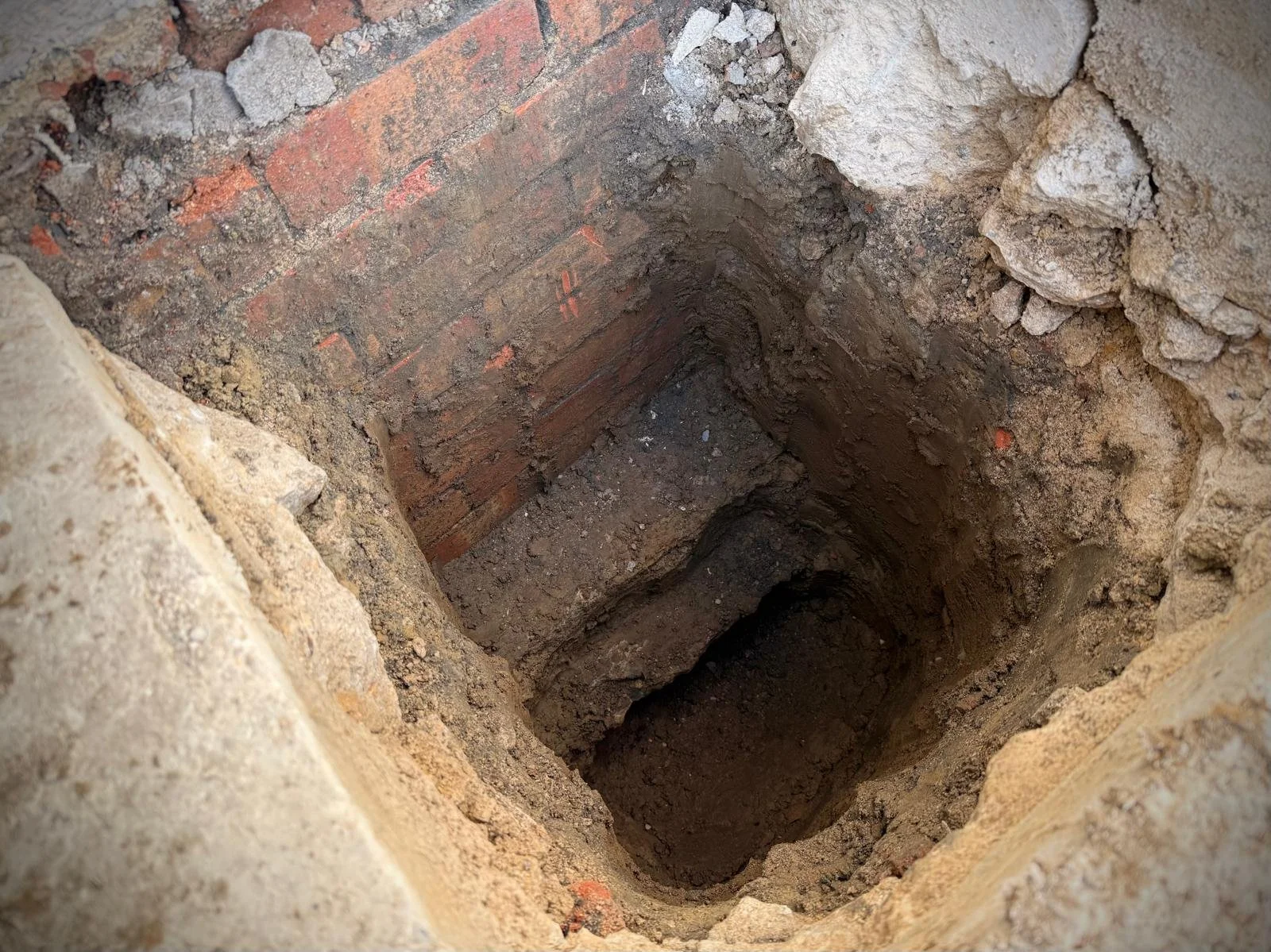
MESH Consulting Engineers - trial holes enable us to investigate what’s really going on
Designing foundations isn't quite as simple as people think
Most people assume foundation design is an exact science but, in reality, there is often a considerable amount of human judgement involved.
When engineers assess foundation requirements, particularly where trees and clay soils are involved, we rely on guidance that has developed over many years from recorded subsidence insurance cases. Factors such as tree species, tree size, distance from the building and soil shrinkability all influence the recommendations.
The aim is sensible risk management, yet this can sometimes create situations that seem difficult to explain to property owners.
Imagine a Victorian house that has stood happily for 150 years. It has shallow foundations by modern standards. There are mature trees in the garden. The building has experienced minor cracking over its lifetime, but nothing unusual. It continues to perform exactly as it always has.
Then the owner decides to build a modest extension.
Suddenly, modern guidance suggests foundations 2.5 metres deep, or perhaps even piled foundations, because of the nearby trees and the potential shrinkability of the soil.
To many people, that feels somewhat contradictory. If the existing house has survived perfectly well for more than a century, why does the extension require such extensive foundations?
The answer lies in risk. Modern construction is expected to perform to modern standards, and engineers are rightly expected to consider future climate conditions as well as current ones.
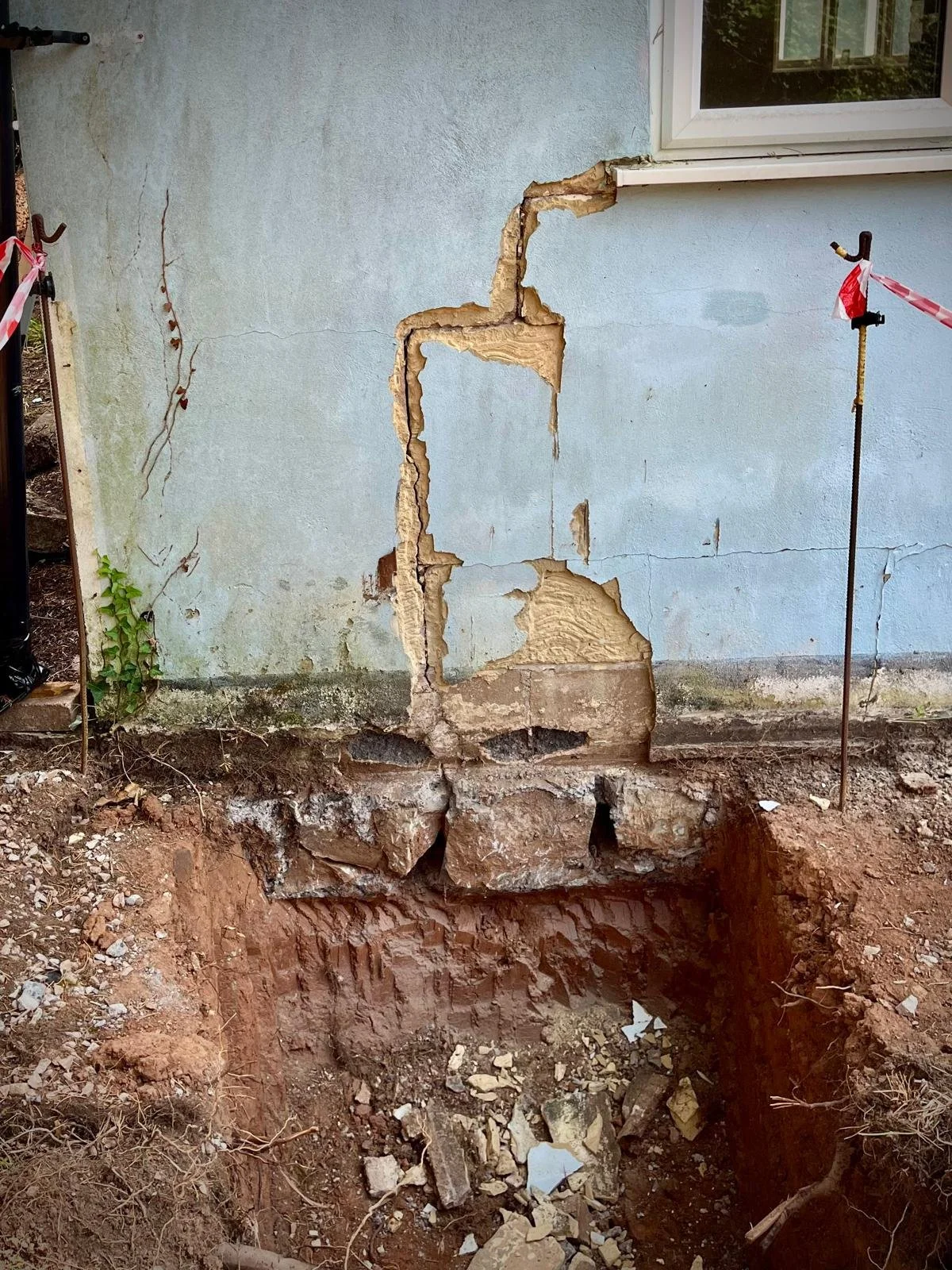
What movement joints have to do with subsidence
When people see cracks, subsidence is often the first thing they think of. However, as we’ve mentioned already, many cracks are simply the result of normal movement.
As experienced engineers, we know that brickwork expands and contracts, and materials respond to moisture naturally. We see structures settle and adjust to soil changes.
Movement joints allow masonry to accommodate these small changes without cracking. They are a simple but important part of good design. And as temperatures become more extreme, movement joints become increasingly important. Yet they are often overlooked, particularly on smaller projects where they may be seen as an inconvenience or omitted for aesthetic reasons (even though they can be fairly discreet!).
The irony is that a relatively simple design decision made today could prevent owners from worrying about cracks and commissioning structural investigations years down the line.
Future-proofing is not just about foundations, it is also about allowing buildings to move in a more controlled and predictable way. It’s about sensible and practical design, which MESH are all about.
Are we designing for the climate we'll actually have?
One of the challenges facing the construction industry is that we are no longer designing solely for the conditions of the past or present.
Buildings completed today will still be standing decades from now. The climate they experience may be very different from the climate we are experiencing today. (Have you seen the 2056 45 degree predictions?)
That raises some difficult questions.
Are we gathering enough information about the ground conditions beneath our buildings?
Are we designing foundations appropriately for future risks?
Are we paying enough attention to movement in masonry?
And are we giving enough weight to local knowledge and experience when making these decisions?
There is an ongoing debate within the industry about foundation design responsibilities, Building Control and the changing regulatory landscape. (NB: we’re going to share more of our thoughts on this soon!) Those discussions are important. But perhaps the bigger question is whether we are preparing buildings for the conditions they are likely to face over their lifetime.
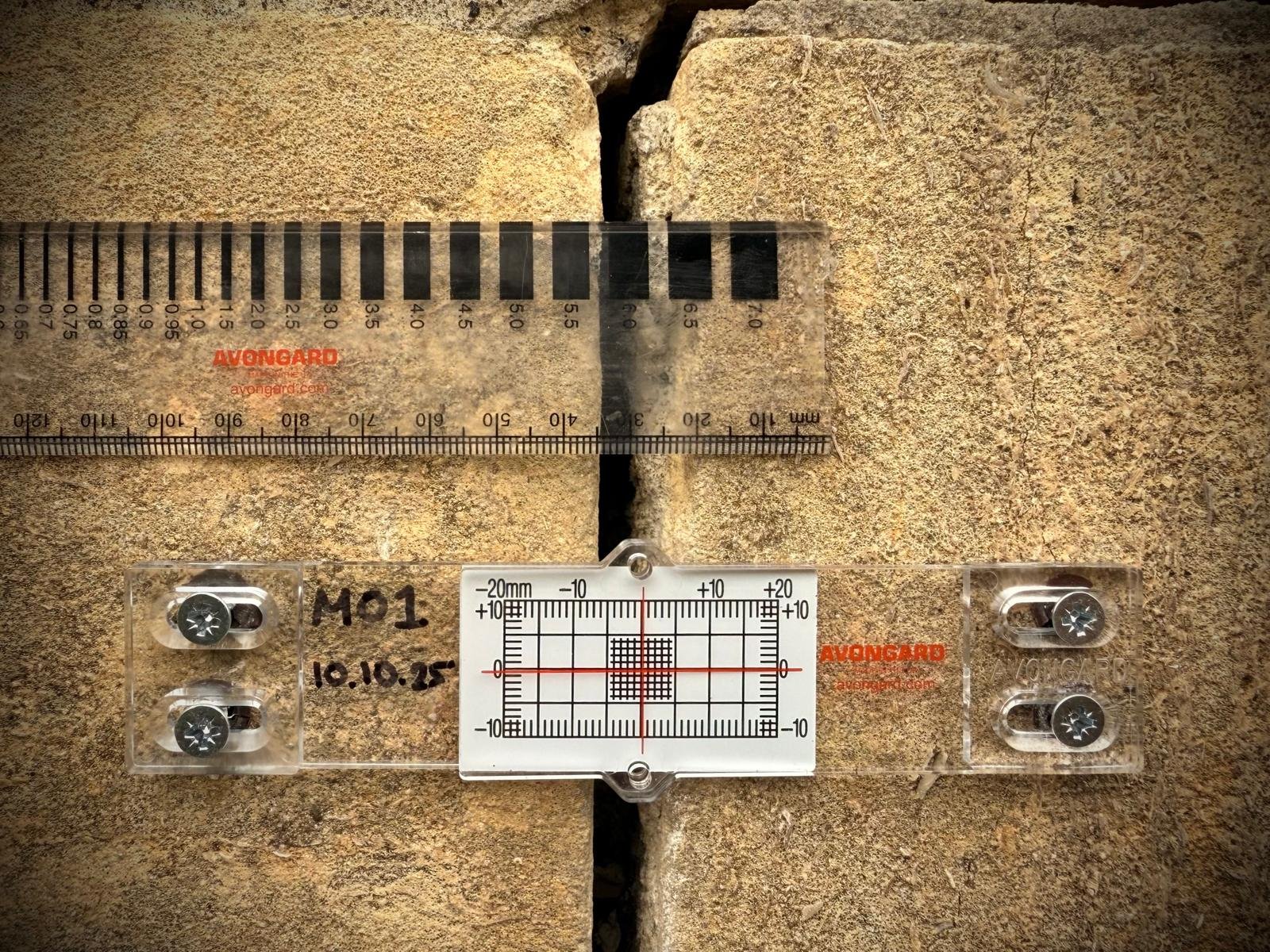
Looking beyond the crack
We have no doubt that Structural Engineers will always be the first port of call when cracks appear in buildings. That is highly unlikely to change anytime soon.
But if we already know that climate change is increasing the risk of subsidence and foundation movement, perhaps we, as an industry, need to spend more time thinking about prevention as well as diagnosis.
That means understanding soils properly and taking time to investigate properly. It also means we need to be designing foundations carefully, considering the impact of nearby trees. And it is vital we recognise that the climate our buildings face in fifty years' time may not look much like the climate they face today.
So while inspecting cracks can be an important part of our work, designing buildings that can accommodate movement in the first place is even more important.
And if you’ve got a crack you’re unsure about, get in touch.